












Last Updated: October 23, 2026
Quick Summary
Sustainable plus size fashion means choosing garments made from lower-impact materials, produced under fair labor conditions, and cut to fit larger bodies well enough to stay in use for years. Judge each piece on fabric, fit, and lifecycle rather than marketing language, and check exact fiber percentages and per-size measurements before buying.
- Bamboo blends need a small amount of spandex to keep their shape and stay in rotation.
- Recycled polyester diverts plastic from landfills but still sheds microfibers in the wash.
- Verify brands through published fiber percentages, factory information, and size charts built from real measurements.
- Buy secondhand first for basics, then fill gaps with new sustainable pieces you will wear repeatedly.
- Turn garments inside out in stores to check flat-felled seams and reinforced stress points.
Table of Contents
- Why Sustainable Plus Size Fashion Is Finally Catching Up
- What Makes Plus-Size Clothing Sustainable
- Sustainable Fabrics for Clothing You'll Actually Wear
- How to Spot Ethical Plus-Size Clothing Brands
- Sustainable Plus-Size Clothing Brands Worth Knowing
- Secondhand Plus-Size Clothing: A Smarter First Stop
- Shopping Sustainable Plus Size Fashion Online and in Stores
- Conclusion
- Frequently Asked Questions
Why Sustainable Plus Size Fashion Is Finally Catching Up
Sustainable plus size fashion shopping guide requests have climbed sharply because the market finally stopped treating larger bodies as an afterthought. For years, "eco-friendly" collections topped out at a size 12, leaving plus-size shoppers to choose between ethics and fit. That gap is closing.
At Love Salve, we built our plus-size assortment around a simple premise: a garment can only be sustainable if the person wearing it actually keeps wearing it. A recycled-fiber piece that sags at the seams after three washes is waste with extra steps.
Below, we'll show you exactly how to judge fabrics, spot genuine ethical claims, and shop both secondhand and new without wasting money on clothes you'll resent. First, here's what most guides get wrong: they rank brands by marketing language instead of material composition and construction.
What Makes Plus-Size Clothing Sustainable
Sustainable plus-size clothing is apparel made from lower-impact materials, produced under fair labor conditions, and cut to fit larger bodies well enough that the garment stays in use for years rather than months. Material choice alone does not make a garment sustainable. Fit, durability, and care requirements carry equal weight.
The Federal Trade Commission's Green Guides set the baseline for how environmental claims can legally be marketed in the United States. A brand calling a fabric "eco-friendly" without qualification is a warning sign, not a selling point.
Fabric, Fit, and the Lifecycle of a Garment
Three factors decide whether a plus-size garment earns the sustainable label.
Fabric determines resource use and how the material behaves against skin. Look for named fibers with a stated percentage, not vague blends.
Fit determines wear frequency. A piece that pulls at the armscye or rides up gets relegated to the back of the closet, and unworn clothing is the least sustainable outcome possible.
Lifecycle covers washing, repair, and eventual disposal. A garment that needs dry cleaning after every wear carries a hidden environmental and financial cost.
Sustainable Fabrics for Clothing You'll Actually Wear
Bamboo, recycled cotton, recycled polyester, Tencel lyocell, and linen are the fabrics most worth seeking out, ranked by how well they hold up in real wardrobes. Each has trade-offs that marketing copy tends to skip.
Bamboo fiber is soft, breathable, and gentle on sensitive skin, which makes it a strong choice for everyday pieces. Our Basic Bae bamboo drop shoulder t-shirt and flare pants set uses a 95% bamboo, 5% spandex blend for exactly this reason: the fabric moves without binding, and the set works as loungewear or a casual outfit.
Recycled polyester, found in denim and activewear, diverts plastic from landfills but still sheds microfibers in the wash. Linen is durable and gets softer with age, though it wrinkles. Tencel lyocell drapes well and uses a closed-loop production process.
| Fabric | Best For | Watch Out For |
|---|---|---|
| Bamboo blend | Everyday comfort, loungewear | Needs spandex for shape retention |
| Recycled polyester | Denim, stretch pieces | Sheds microfibers when washed |
| Tencel lyocell | Drape, breathable tops | Pricier than basic cotton |
| Linen | Warm-weather wear, durability | Wrinkles easily |
| Organic cotton | Basics, tees | Can shrink without pre-shrinking |
How to Spot Ethical Plus-Size Clothing Brands
Ethical plus-size clothing brands share three visible traits: published material percentages, transparent factory information, and size charts built from real body measurements rather than scaled-up straight sizes. You can verify all three before spending a dollar.
Start with the product page. If the fabric composition, care instructions, and size measurements are missing, the brand is hiding something or hasn't done the work. Next, look for a supplier or factory disclosure.
Then check the size chart against your own measurements, not the size you "usually" wear. A brand that publishes rise, inseam, and leg opening for each size is telling you it graded the pattern properly.
Questions to Ask Before You Buy
Run through this checklist before any purchase:
- Does the product page state exact fiber percentages?
- Are measurements listed per size, not just a generic S/M/L chart?
- Does the brand explain where the garment is made?
- Is the return policy clear enough that a wrong fit isn't a financial loss?
- Do customer photos show the garment on bodies similar to yours?
- Does the care label require dry cleaning or other high-effort maintenance?
Sustainable Plus-Size Clothing Brands Worth Knowing
The strongest sustainable plus-size clothing brands in 2026 compete on transparency and fit rather than slogans.
Women's Plus Essential Sustainable Skinny Jeans →
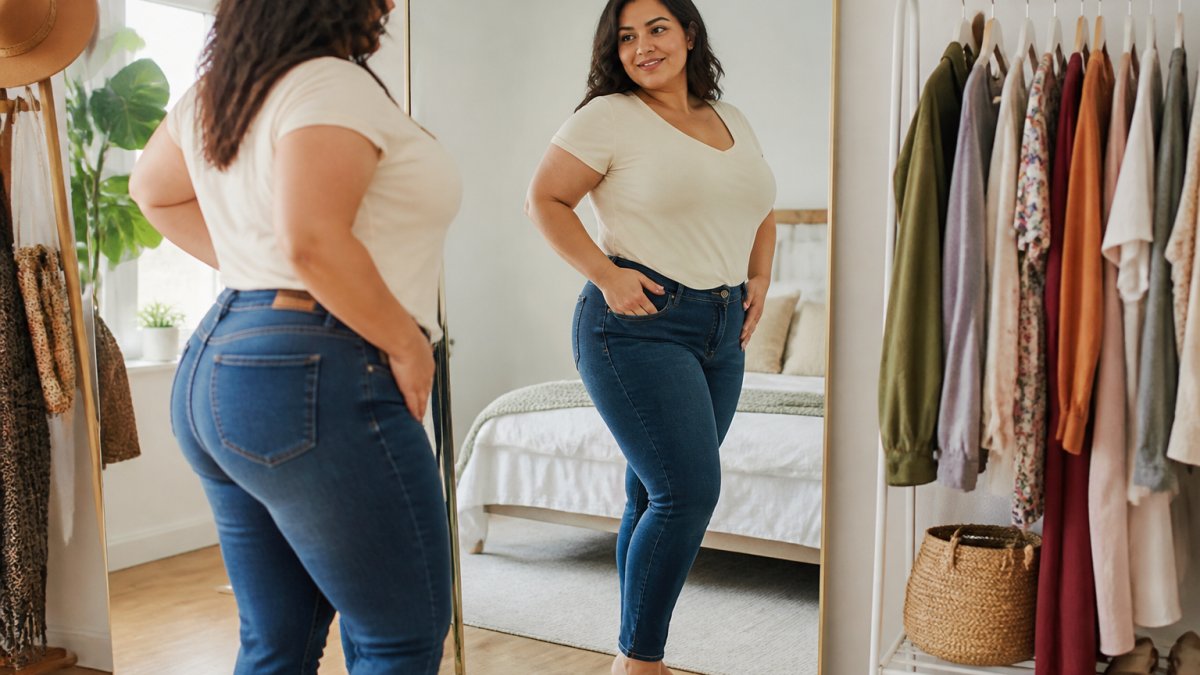
Our plus-size sustainable skinny jeans are made with recycled fibers and a high-rise, three-button closure, with a 30-inch inseam and 12-inch rise based on a size 18. If you prefer a lived-in look, the distressed version uses the same recycled-fiber construction with a one-button closure.
What most guides miss is that sustainable denim almost always includes some synthetic content. That's not a failure. A small percentage of Lycra is what prevents bagging at the knee, and bagging is what sends jeans to the donation bin.
Secondhand Plus-Size Clothing: A Smarter First Stop
Secondhand plus-size clothing is the highest-impact starting point for any sustainable wardrobe, because the garment already exists. No new fiber, no new dye, no new shipping from a factory.
The catch is selection and fit consistency. Plus-size secondhand inventory is thinner than straight-size, and sizing varies wildly between decades and manufacturers.
When buying secondhand online, ask sellers for flat-lay measurements: waist, rise, inseam, and pit-to-pit. Most listings only give a tag size, and a tag size from 2009 fits nothing like the same size today.
Shopping Sustainable Plus Size Fashion Online and in Stores
Shopping sustainable plus size fashion successfully comes down to verifying fit data before checkout and confirming return terms before you commit. For specific dressing needs, see our guide to plus size occasion wear brands. Online gives you the widest selection; in-store gives you the ability to feel the fabric and check the seams.
For online shopping, do these four things in order:
- Compare your measurements to the brand's per-size chart, not the size label.
- Read the return window and who pays return shipping.
- Look for customer photos on bodies close to yours.
- Check the care label requirements before you buy anything high-maintenance.
In stores, turn the garment inside out. Flat-felled seams and reinforced stress points signal construction built to last. Feel the fabric at the seat and inner thigh, where wear shows up first.
Conclusion
The hardest part of sustainable plus-size shopping isn't finding brands. It's resisting the urge to buy five cheap pieces instead of two you'll wear for years. That discipline is what separates a wardrobe that lasts from a cycle of replacements.
At Love Salve, we build plus-size pieces around that idea: recycled-fiber denim with real stretch and recovery, bamboo blends that stay soft, and measurements published per size so you order once. Free shipping means you can try the fit without a penalty, and our curated selection keeps the browsing short.
Get started with Love Salve and build a plus-size wardrobe you actually keep wearing.
Frequently Asked Questions
What makes plus-size clothing sustainable?
A garment counts as sustainable when its fabric, production, and lifespan all reduce environmental impact. That means recycled or lower-impact fibers, dyes and finishes that use less water and energy, fair treatment of the people sewing it, and construction sturdy enough to survive many washes. For plus-size shoppers, sustainability also means real fit across sizes, because a garment that gets returned or tossed after one wear wastes everything used to make it. Look for specific fiber percentages on the label and brands that publish sizing details for larger sizes, not just straight sizes.
How can I tell whether a plus-size clothing brand is ethical?
Start with disclosure. Ethical plus-size clothing brands publish where their clothes are made, name their factories or supplier partners, and explain their labor standards. Look for third-party certifications, a public code of conduct, and clear care and fiber information on each product page. Vague words like 'conscious' without detail are a warning sign. A practical test: can you find out who made the garment and what it is made of within two clicks? If not, treat the claim as marketing until the brand proves otherwise.
What fabrics should I look for in sustainable plus-size fashion?
Look for recycled cotton and recycled polyester, which divert waste and appear in denim and stretch styles. Bamboo fiber blends feel soft, breathe well, and suit loungewear and everyday basics. Tencel lyocell and modal use closed-loop wood-pulp processing. Organic cotton avoids synthetic pesticide use, and linen from flax needs little irrigation. For stretch, a small share of Lycra or spandex helps plus-size pieces hold shape. Check the percentage breakdown on the label, since a 95% bamboo, 5% spandex blend behaves very differently from a 50/50 mix.
Where can I find sustainable plus-size clothing?
Three routes work well. First, dedicated plus-size brands that publish fiber and factory details, like Love Salve, which lists recycled-fiber denim and bamboo sets with full size charts. Second, secondhand marketplaces and resale apps filtered by size, where you can find quality pieces at lower prices. Third, local consignment and thrift stores in larger-size sections, which often carry lightly worn denim and dresses. Whichever route you choose, confirm the size chart, the fiber content, and the return policy before you pay.
How can I shop for plus-size clothes more sustainably on a budget?
Buy fewer pieces that work harder. Choose fabrics that hold up, like recycled cotton denim or bamboo blends, and check care instructions so you wash them correctly. Shop secondhand first for trend pieces and save new purchases for staples you will wear weekly. Wait for sales on quality brands rather than buying cheap items that fall apart. Repair buttons, hems, and seams instead of replacing. A $30 pair of recycled-fiber skinny jeans worn twice a week for a year costs far less per wear than three fast-fashion pairs that lose shape in a season.
Is secondhand shopping a good option for plus-size fashion?
Yes, and it is often the most sustainable option because it extends the life of clothing already made. Search resale apps and thrift stores by your measurements rather than tag size, since sizing varies between brands. Ask sellers for flat-lay measurements and photos of the item on a body similar to yours when possible. Focus on quality fabrics like denim, linen, and wool that survive resale well. Secondhand plus-size clothing also lets you test brands before buying new, which reduces the risk of returns.
How can I make plus-size clothes last longer?
Wash less often, in cold water, and inside out to protect color and stretch fibers. Use a mesh laundry bag for delicates and skip the dryer for stretch denim and bamboo, which lose elasticity with heat. Air-dry flat when you can. Repair loose buttons and small seams early. Rotate your wardrobe so no single piece wears out fast. Store knits folded rather than hung to keep their shape. These habits add months or years to a garment, which is the simplest sustainability step available to any shopper.


