













Quick Summary
To choose plus size swimwear for tummy control, measure your bust, waist and hips against the brand's size chart, then pick a one-piece or high-waisted bottom with a built-in shaping panel. Test the fit by raising your arms, sitting and breathing deeply, and check it again once wet.
- Measure bust, natural waist and hips, then compare to the brand's size chart, not just your usual letter size.
- One-piece swimsuits offer the most continuous shaping across the midsection.
- A high waistband sits above the belly button and keeps the lower stomach flat.
- Choose light, moderate or firm compression based on how long and how actively you will wear the suit.
- Do the arm-raise, sit-down and deep-breath checks, then repeat them after wetting the suit.
Table of Contents
- Why Tummy-Control Swimwear Works Differently From Everyday Shapewear
- Step 1: Find Your True Size Before You Shop
- Step 2: Pick a Style That Suits Your Shape: One-Piece, Two-Piece or Tankini
- Step 3: Check the Shaping Fabric, Ruching and Panel Construction
- Step 4: Get Bust Support Right With Underwire, Cups and Straps
- Fit and Comfort Checks: Tight Versus Compressed, and Whether It Will Stay Put
- Care, Durability and Returns: Keeping Your Swimsuit Shaping Longer
- Your Next Step: Shop the Love Salve Tummy-Control Picks
- Frequently Asked Questions
Why Tummy-Control Swimwear Works Differently From Everyday Shapewear
Tummy-control swimwear uses stretch fabric and built-in panels to smooth the midsection while you move through water. It is designed to stay put when wet, which is a harder job than shaping under a dry top.
Everyday shapewear is often tight and made to be worn for a few hours. Swimwear has to handle chlorine, saltwater, sun and repeated stretching, so the fabric and seams are built differently.
Step 1: Find Your True Size Before You Shop
Measure your bust, waist and hips, then compare those numbers to the brand's size chart. Do not rely only on the size you wear in regular clothing. Swimwear sizing often runs differently from dresses or jeans.
Here is a quick checklist:
- Measure your bust at the fullest point
- Measure your natural waist
- Measure your hips at the widest point
If your measurements fall between two sizes, many shoppers choose the larger size for a more comfortable fit. A snug fit in swimwear can feel great in the fitting room but become uncomfortable once the fabric stretches with water.
Step 2: Pick a Style That Suits Your Shape: One-Piece, Two-Piece or Tankini
Three styles dominate plus size swimwear for tummy control:
- One-piece swimsuits: Offer the most continuous shaping across the midsection
- Two-piece swimsuits: Give you more flexibility, but the bottom piece needs to sit well at the waist
- Tankinis: Cover the midsection with a longer top, which can feel more relaxed
A one-piece swimsuit is the most common choice for smoothing the stomach area. For a two-piece, check that the bottom has a high or mid-rise waist so it does not roll under the top.
Our Women's Chic Printed Two-Piece Swimsuit for Summer is a good option if you want a two-piece look. Pair it with a high-waisted bottom if you want more shaping.
Why high-waisted plus size swimsuits smooth the midsection
A high waistband sits above the belly button and keeps the fabric flat across the lower stomach. Many shoppers find that a high-waisted bottom looks smoother than a low-rise style, especially when the fabric is ruched or has a shaping panel.
Our Trendy High Waist Fringe Swim Skirt is one example of a high-waisted option. Check that the waistband is comfortable when you sit down, since a band that digs in can ruin the look.
Step 3: Check the Shaping Fabric, Ruching and Panel Construction
Most product listings use the same handful of words, tummy control, shaping, smoothing, without explaining what is actually doing the work. The construction details below are what separate a suit that smooths comfortably from one that rolls, digs in, or stretches out after a few swims. Read the product description and fabric content with these mechanisms in mind.
How each shaping construction actually works
- Built-in shaping panel (compression panel): A second layer of firmer fabric sewn across the front midsection, usually from under the bust to the high hip. It smooths by applying even pressure rather than squeezing at one point. A good panel is bonded or stitched flat at the edges so it does not create a ridge under the outer fabric.
- Power mesh lining: A lightweight, open-weave knit used as an inner layer. It adds hold without bulk and dries quickly, which is why it is common in one-pieces. Mesh alone is gentle; it is usually combined with a front panel for stronger smoothing.
- Ruching (gathered fabric): Extra fabric gathered along side seams or a center seam. The gathers add stretch where you need it and break up the visual line across the stomach. Ruching is the least compressive option, it flatters through drape and movement rather than pressure.
Choose your compression level on purpose
Compression is a dial, not a yes/no. Match it to how you will use the suit:
- Light smoothing (ruching, mesh lining, no firm panel): Best for lounging, casual swimming, and all-day wear. Easiest to breathe and move in.
- Moderate shaping (front panel plus lined construction): A good default for regular pool swimming and beach days. Firms the midsection without restricting a deep breath.
- Firm compression (bonded panel, high spandex, structured seams): Most smoothing, but the least forgiving if the size is off. Reserve it for occasions when you want maximum hold and will not be wearing the suit for many hours.
A practical test: take a deep breath and twist your torso before you commit. If the panel restricts either, size up or drop one compression level. Firm is fine; restrictive is not.
Red flags in the fabric and construction
- Thin, flimsy fabric: Feels light in the fitting room but stretches out of shape after a few wears in chlorine. If you can see light through the fabric when you hold it up, expect it to lose hold.
- A panel that ends in a hard seam: The edge can create a visible line or dig in when you sit. Look for bonded or flat-locked edges.
- No fabric content listed: A listing that will not state the fiber blend is a warning sign, you cannot judge stretch or recovery without it.
swimwear fabric care and fiber guidance
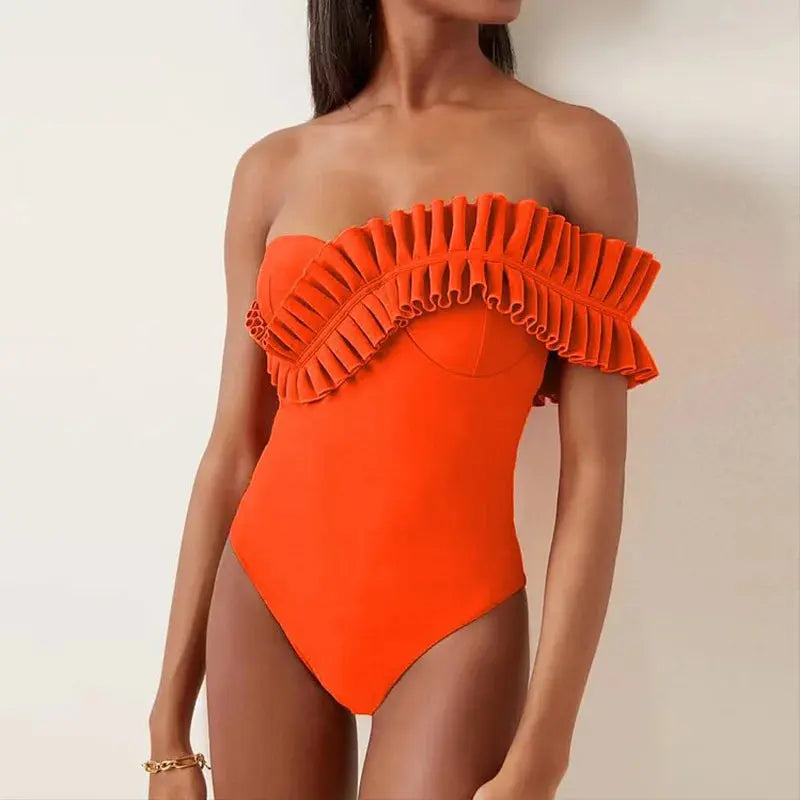
Women's One Piece Swimsuit - Ruffle Cutout Tummy Control - Beach Swimwear →
Step 4: Get Bust Support Right With Underwire, Cups and Straps
Bust support is where many plus size swimsuits fail. A good swimsuit should hold your bust in place without digging into your shoulders or causing back pain.
Check these details:
- Underwire: Gives strong lift, but can poke if the cup is the wrong size
- Removable padded cups: Let you adjust support and coverage
- Adjustable straps: Help you fine-tune the fit across your shoulders
If you need extra support, look for a one-piece with underwire or a bra-style top with adjustable straps. Our Scoop Neck Comfort Bra Adjustable Straps is a useful reference if you want to compare support features before choosing a swimsuit.
Fit and Comfort Checks: Tight Versus Compressed, and Whether It Will Stay Put
Snug is not the same as compressed, and compressed is not the same as too small. The difference shows up in how the suit behaves when you move, not how it looks in a mirror. Proper tension ensures the fabric remains secure during activity, providing a stable foundation that allows you to explore flattering silhouettes that balance your unique proportions.
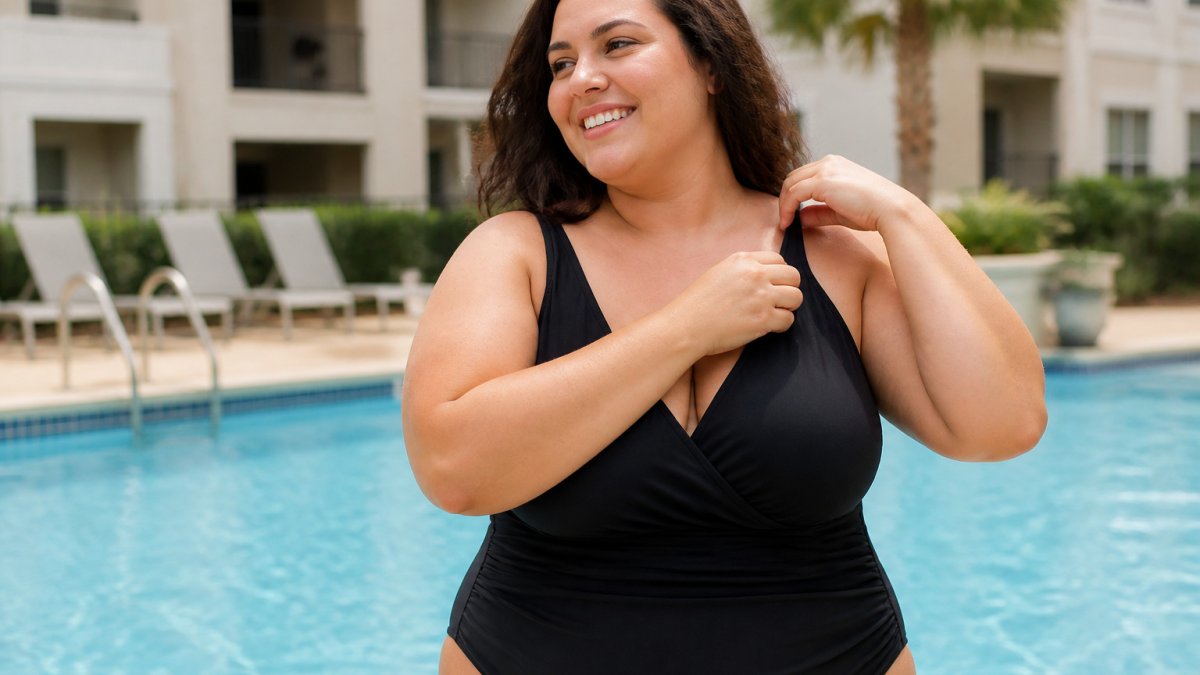
The five-minute movement test
Try the suit on at home with the tags on and do all of these before you decide:
- Raise your arms overhead. Straps and bust should stay in place. If the straps slide off your shoulders or the bust rides up, the suit is either too long in the torso or the straps need adjusting.
- Bend forward and sit down. The midsection panel should lie flat, not dig into your waist or roll down. A panel that folds when you sit will do the same in the water.
- Walk and twist for a few minutes. Note any pinching at the waist, under the arms, or at the leg openings. Pinching means the size or cut is wrong.
Adjust for torso length
Torso length is the most common reason a suit that fits the bust and hips still feels wrong.
- Long torso: One-pieces can pull down at the shoulders and ride up at the leg. Look for suits labeled long-torso, or choose a tankini where the top and bottom are sized separately so you can bridge the length.
- Short torso: A one-piece can bunch at the waist and create folds over the panel. A higher-cut leg and a shorter torso line, or a two-piece with a high-waisted bottom, often sits cleaner.
Adjust for hip-to-waist proportion
- Waist notably smaller than hips: A suit cut straight through the middle can gap at the waist. Look for adjustable side ties, a drawstring waist, or a wrap-style front that lets you cinch the middle.
- Waist close to hip measurement: A high-waisted bottom with a wide, flat band distributes pressure better than a narrow elastic band, which tends to roll.
Adjust for bust support needs
- Fuller bust: Prioritize a suit with an underwire or a bra-style band that sits flat around the ribcage. The band, not the straps, should carry most of the support. Adjustable straps fine-tune the rest.
- Smaller bust: Removable padded cups let you add shape without a firm underwire. Check that the cups stay put when you move; loose cups bunch when wet.
- Asymmetric or post-surgery needs: Look for suits with removable cups and adjustable straps so you can balance coverage on each side.
Signs the suit is too small versus firmly supportive
| Signal | Firmly supportive (good) | Too small (return it) |
|---|---|---|
| Breathing | Full, easy breaths | Shallow breaths, tight chest |
| Straps | Stay put with light adjustment | Dig into shoulders, leave marks |
| Midsection panel | Lies flat when sitting | Rolls down or digs in at the waist |
| Leg openings | Flat against the body | Cut in or ride up when walking |
| Fabric | Snaps back when stretched | Stays stretched or looks thin |
Check it will stay put in the water
Dry-land fit is only half the test. Before you commit, wet the suit in a sink or shower and repeat the arm-raise and sit-down checks. Wet fabric stretches and gains weight; a suit that felt firm dry can loosen, and one that felt borderline can become uncomfortable. If it still holds its shape and stays in place when wet, you have found the right fit.
Care, Durability and Returns: Keeping Your Swimsuit Shaping Longer
Swimwear fabric lasts longer when you care for it properly. Rinse your swimsuit in cool water after every swim, especially after pool or ocean use. Hand wash in cold water with a mild detergent, and line dry it out of direct sun.
Avoid wringing the fabric, which can stretch the shaping panel. Do not use bleach or high heat, since both break down elastic fibers.
Before you buy, read the return policy.
Your Next Step: Shop the Love Salve Tummy-Control Picks
You now have a clear process: measure, pick a style, check the shaping features, test bust support and confirm the fit. Use these steps on any site, and you will spend less time returning swimsuits that do not work.
At Love Salve, we carry a curated selection of plus size swimwear built for real bodies. Check the size chart before you order.
Frequently Asked Questions
What swimsuit styles are best for tummy control?
One-piece swimsuits with an integrated tummy-control panel are the most reliable choice, because the shaping sits in one continuous piece of fabric. High-waisted bottoms and ruched or gathered midsections also smooth the lower belly without a hard line. Two-piece sets can work if the bottom is high-waisted and the top offers bust support. Look for moderate to firm compression rather than a tight squeeze, and check that the panel covers your full stomach from ribcage to hip.
How should a plus size swimsuit fit around the stomach?
The fabric should lie smoothly across your stomach without digging in, rolling or leaving red marks after you take it off. You should be able to breathe comfortably and bend at the waist. If the panel pulls into horizontal wrinkles or the leg openings ride up, the size is likely too small. Measure your waist, bust and hips and compare them with the brand's size chart before ordering.
Should tummy-control swimwear feel tight?
It should feel snug and supportive, not tight. Shaping swimwear is designed to hold you gently, so some firmness is expected, but pain, numbness or difficulty breathing are signs of too much compression. Try the suit on, sit down, lift your arms and move around for a few minutes. If it stays put and stays comfortable, it is the right fit.
How do I choose a swimsuit that supports a larger bust?
Look for underwire or structured cups, wide band support and adjustable or racerback straps, which distribute weight more evenly. Removable padding gives you control over shape and coverage. Check that the cups fully contain your bust without spilling over the top or gapping at the sides. Band width matters as much as the cup, so a wider band usually provides more lift and stability in the water.


