














Last Updated: November 6, 2026
Quick Summary
Take your body measurements over bare skin or thin clothing with a flexible tape kept level and snug, recording bust, waist, hips, shoulders, sleeve and back length in inches. Compare those numbers to the retailer's size chart, checking whether it lists body or garment measurements before ordering.
- Measure in the morning, stand tall and relaxed, and keep the tape parallel to the floor.
- Your natural waist is the narrowest point above your belly button, found by bending sideways.
- Measure hips at the fullest part, usually about 8 inches below your waist.
- Body measurement plus desired ease equals the target garment measurement for comparison.
- For low-stretch fabrics like woven cotton or linen, size up when between sizes.
Table of Contents
- How to Measure Your Body for Online Shopping
- How to Take Body Measurements for Clothing (Female Guide)
- How to Know My Body Size for Clothes Without a Measuring Tape
- Garment Measurements vs. Body Measurements
- What to Do When You Fall Between Sizes
- Shop Love Salve with Confidence
- Frequently Asked Questions
How to Measure Your Body for Online Shopping
Ordering clothes online works best when you know your body measurements.
A common worry among online shoppers is "What if it doesn't fit?" The fix starts before you click add to cart.
Most guides stop at bust, waist, and hips. That's a mistake.
Body measurements are the numbers you take from your own body, not from a garment. They are the starting point for every size chart you'll meet online.
How to Take Body Measurements for Clothing (Female Guide)
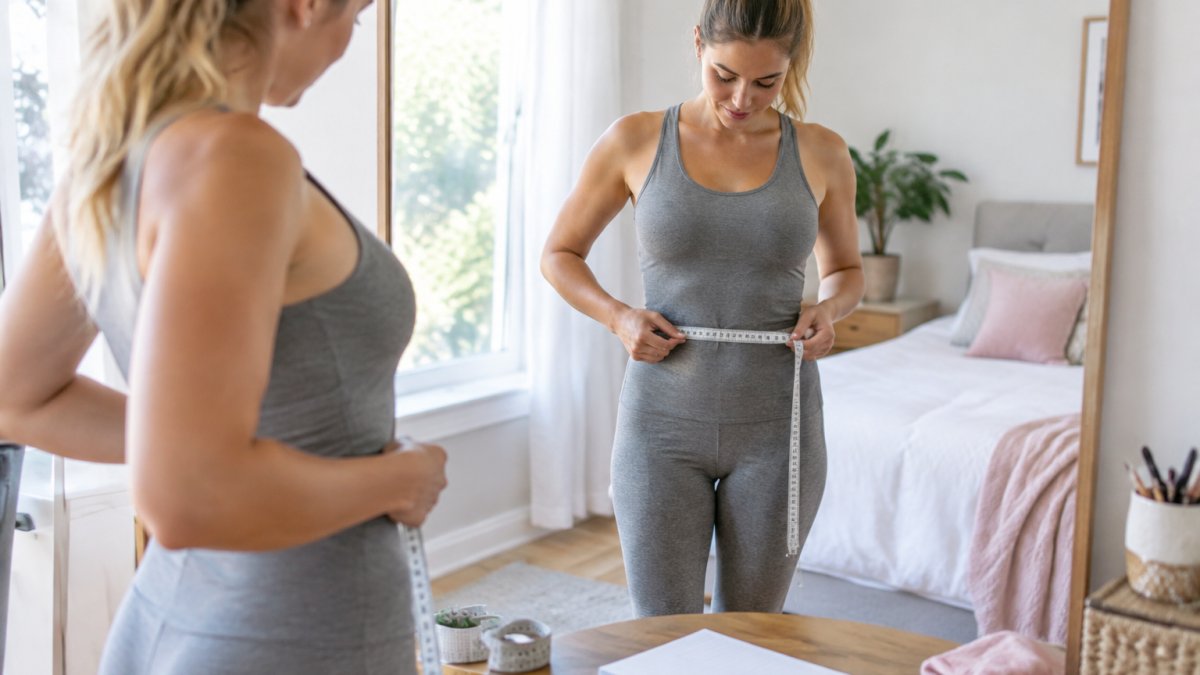
The best results come from measuring over bare skin or thin, form-fitting clothing. Wear the underwear you'd normally wear under the garment, and stand relaxed.
You'll need:
- A flexible tape measure, not a rigid ruler
- A mirror, or a helper for back and shoulder numbers
- A notebook or phone to record each number
How to Know My Body Size for Clothes Without a Measuring Tape
No tape on hand? You can still get close. Use these stand-ins and convert them to inches.
| Tool | How to Use It | Best For |
|---|---|---|
| String or ribbon | Wrap, mark, then lay flat against a ruler | Waist and hips |
| Belt | Mark the hole that fits, then measure the belt | Waist |
| Printer paper | Standard sheet is 8.5 x 11 inches | Short lengths |
| Dollar bill | About 6 inches long | Quick checks |
| Existing well-fitting garment | Lay flat and measure it | Comparing to size charts |
A well-fitting garment you already own is the most reliable backup. Lay it flat, measure across the chest and waist, and double those numbers.
This method has limits. It works best for tops and relaxed fits. For structured pieces, a real tape measure is worth the small cost.
Garment Measurements vs. Body Measurements
Garment measurements are the dimensions of the clothing itself, measured flat. Body measurements are the numbers from your body. They are not the same, and mixing them up causes most size mistakes.
A size chart may list body measurements, garment measurements, or both. Always check which one you're reading before you compare anything.
How to tell which chart you're looking at
- Body-measurement charts usually say "bust," "waist," and "hips" and give ranges like 36-37 inches. These are meant to be compared directly to your own numbers.
- Garment-measurement charts usually say "chest width," "body length," or "waist flat" and give single numbers, often smaller than body numbers. These describe the clothing, not the person.
- Mixed charts list both, sometimes in separate columns. Read the column headers carefully; the difference between "waist" and "waist flat" is the difference between a correct order and a return.
The arithmetic: adding ease
Ease is the extra room between your body and the fabric. A fitted dress has little ease. A relaxed top has more. To compare a garment measurement to your body measurement, add your preferred ease to your body number, then compare.
A simple formula:
Body measurement + desired ease = target garment measurement
For example, if your bust measures 38 inches and you want a relaxed top with about 4 inches of ease, your target garment bust is about 42 inches. If the chart lists a garment bust of 42 inches, that size is your match. If it lists 40 inches, that size will fit closer to the body than you want.
Ease preferences vary by garment type. A common pattern is roughly 2-3 inches of ease for a fitted top, 4-6 inches for a relaxed top, and 6 or more inches for an oversized look.
How to measure a garment flat
If a chart gives garment measurements, you can verify them against a piece you already own:
- Button or zip the garment and lay it flat on a table.
- Measure straight across the chest, from armpit seam to armpit seam. Double that number for the full chest circumference.
- Measure straight across the waist at the narrowest point. Double it.
- Measure straight across the hip at the fullest point. Double it.
- Measure the body length from the shoulder seam to the hem.
Compare those doubled numbers to the chart. If they match the size you're considering, you have a strong signal that the fit will be close to the garment you already like.
Watch out: measuring a garment while it's stretched or hanging can add an inch or more. Always lay it flat and let it relax before you measure.
Our sleek shaping bodysuit is a good example of a fit-critical piece. Checking body and garment numbers before ordering makes a real difference there.
What to Do When You Fall Between Sizes
Falling between sizes is normal, not a sign you measured wrong. What matters is having a repeatable rule instead of guessing at the cart. Use the four-factor check below in order, and you'll land on the right size far more often than you'll land on the wrong one.
Step 1: Confirm which chart you're reading
Before anything else, check whether the retailer's chart lists body measurements or garment measurements. If it lists body measurements, compare your own numbers directly. If it lists garment measurements, you'll need to add your preferred ease first (see the garment-vs-body section above). Mixing the two is the single most common cause of ordering the wrong size when you're between two.
Step 2: Read the fabric
Fabric content tells you how much forgiveness you have.
- High stretch (knit, jersey, spandex blends, ribbed fabrics): your smaller size usually works, because the fabric moves with you. A common pattern is that shoppers who size up in stretch pieces end up with a baggy fit they don't wear.
- Low stretch (woven cotton, linen, tailored wool, non-stretch denim): size up. These fabrics have little give, and a too-small woven piece will pull at the seams and restrict movement.
- No stretch (structured outerwear, lined blazers, leather): size up, and check the shoulder and sleeve measurements specifically, since those are the hardest areas to alter.
Step 3: Match the intended silhouette
Ask how the piece is meant to sit on the body, then pick the size that produces that look.
- Fitted or bodycon: size up if you're between sizes and the fabric has low stretch; size down if it's high stretch and you want a close fit.
- Relaxed or oversized: size down for a closer take on the look, or stay at your larger measurement if you want the full intended drape.
- Layered pieces (jackets, cardigans, vests): size up so there's room for a shirt or sweater underneath without pulling across the back.
- High-rise trousers and jeans: pay attention to the rise and waist measurement rather than the hip alone, since a between-size waist is harder to fix than a between-size hip.
Step 4: Check the retailer's fit notes and reviews
Many product pages include a fit note ("runs small," "true to size," "size up if between") and customer reviews that mention height and size ordered. Read three or four reviews from shoppers with measurements close to yours.
Watch out: a single review saying "runs small" can reflect one shopper's fit preference rather than the garment's actual cut. Look for a pattern across multiple reviews before you change your size.
When the chart is missing or inconsistent
Some retailers publish no size chart, or the chart changes between product pages. In that case, use this fallback method:
- Find a garment you already own that fits the way you want this piece to fit.
- Lay it flat and measure the chest, waist, and hip across, then double each number.
- Compare those doubled numbers to the product's listed garment measurements, if any.
- If no garment measurements are listed, check the return policy before ordering. A free-return policy makes ordering two sizes and returning one a reasonable strategy; a final-sale policy makes it a bad one.
- Contact the shop directly if the chart is unclear. A short message asking for the garment's flat measurements often gets a precise answer.
If you're between sizes in jeans, our high rise straight jeans page lists size and fit details you can check before you decide.
Shop Love Salve with Confidence
Measuring once saves you the hassle of returns. With your numbers written down, every size chart becomes easier to read.
Love Salve offers inclusive fashion for every body type, with plus-size options, trendy dresses and swimwear, and free shipping.
Ready to put your measurements to use? Browse the collection and shop Love Salve pieces with your new numbers in hand.
Your measurements are the fastest way to stop guessing at sizes.
Frequently Asked Questions
How do you measure your body for online clothes shopping?
Use a flexible measuring tape and wear form-fitting clothing or underwear. Measure your bust at the fullest point, your natural waist at the narrowest part, and your hips at the widest point. Keep the tape level, flat, and comfortably snug, not tight. Record each measurement in inches and compare them to the retailer's size chart. Recheck each number once, and measure in front of a mirror to confirm the tape stays parallel to the floor.
How can you measure your body for clothes without a measuring tape?
Use a piece of string or a ribbon, then lay it flat against a ruler or a printed paper tape. You can also measure a garment you already own that fits well and compare those numbers to the size chart. For a rough estimate, a standard sheet of paper is 8.5 inches wide, which helps you check lengths. Always confirm with the retailer's chart, and if you are between sizes, size up for a more comfortable fit.
Should you measure your body or a garment when shopping online?
Measure your body first, then compare those numbers to the retailer's size chart. Some brands list garment measurements (like pit-to-pit or length) rather than body measurements. In that case, measure a similar piece you already own and love, and match those numbers. Body measurements tell you your size; garment measurements tell you how a specific piece will fit. Use both when the chart provides them.
How often should you update your body measurements?
Remeasure every three to six months, or whenever your weight, fitness routine, or fit preferences change. Hormonal shifts, aging, and pregnancy also affect measurements. Keep a note on your phone with your current bust, waist, and hip numbers in inches so you can check them against any size chart before ordering. If a brand's sizing feels inconsistent, remeasure and compare again before you buy.


