












Last Updated: October 28, 2026
Quick Summary
Sustainable plus size activewear reviews are worth trusting only when they go beyond star ratings to check size accuracy, workout intensity, wash durability and named third-party certifications like GRS or RCS. Read the two- and three-star reviews first, since sizing complaints and durability problems cluster there. Judge fit and durability on the fiber blend, and treat the recycled claim as one data point, not a verdict.
- Read two- and three-star reviews first, where sizing complaints and durability problems cluster.
- A recycled label needs a percentage and a named certifier such as GRS or RCS.
- Spandex drives stretch and recovery, so judge the fiber blend on fit and durability.
- Cost per wear divides price by wears; the $24.00 biker shorts work out to about 23 cents per wear.
- Sizing down for more support backfires because compression comes from the fabric blend, not a tighter tag.
Table of Contents
- How to Read Sustainable Plus Size Activewear Reviews
- Quick Comparison: Five Activewear Pieces at a Glance
- Plus Size Sustainable Workout Clothes Tested by Workout Type
- Recycled Fabric Plus Size Leggings: What the Labels Actually Mean
- Ethical Plus Size Activewear: Verifying Brand Claims
- Sustainable Sports Bras for Plus Sizes: Sizing and Support
- Cost Per Wear: Which Pieces Earn Their Price
- Building Your Capsule With Love Salve
- Frequently Asked Questions
How to Read Sustainable Plus Size Activewear Reviews
Sustainable plus size activewear reviews combine two questions: does the garment fit and perform on a larger body, and does the brand's environmental claim hold up. Most reviews answer only the first, and that gap is where bad purchases happen.
A five-star rating tells you someone liked a pair of leggings. It does not tell you whether the fabric is genuinely recycled, whether the size chart matches the body, or whether the seams survive twenty washes.
Below, we break down how to read reviews critically, compare five pieces from our collection, and show what to check before you spend money on ethical plus size activewear.
What Star Ratings Hide
A star rating compresses everything a buyer experienced into one number.
Here is what ratings routinely bury:
- Size accuracy. Reviews rarely state the reviewer's height and usual size, so "true to size" means nothing without that context.
- Workout intensity. A legging rated five stars by a walker may fail a runner.
- Wash durability. Most reviews are written in the first two weeks, before pilling and seam stress show up.
Read the two- and three-star reviews first, sizing complaints and durability problems cluster there, making it the fastest way to learn what a garment does wrong.
Quick Comparison: Five Activewear Pieces at a Glance
Here is how our five activewear pieces compare on price, fabric, and best use. Every price below is the current listed price.
| Piece | Price | Fabric | Best For |
|---|---|---|---|
| Marni Pocket Leggings | $47.60 | Soft stretch, seamless | Gym and all-day wear |
| Sculpted Stretch Leggings | $78.81 | 74% nylon, 27% spandex | Sculpted athleisure |
| Seamless Moisture Wicking Leggings | $54.45 | 80% nylon, 20% spandex | Sweat-heavy training |
| No Cling Premium Biker Shorts | $24.00 | Full-stretch knit | Layering and summer |
| Indy Leggings | $59.00 | Sculpting stretch blend | High-impact and daily wear |
The spread matters. The biker shorts cost roughly a third of the Sculpted Stretch Leggings. Price and performance do not move in a straight line.
Plus Size Sustainable Workout Clothes Tested by Workout Type
Support needs change with the workout, the single most useful filter when you read sustainable plus size activewear reviews. A garment that shines in yoga can roll down during a run.
High-Impact vs Low-Impact Support
The Seamless Moisture Wicking Leggings are described as having a high waist for abdominal support and seamless construction. The Indy Leggings have reinforced seams.
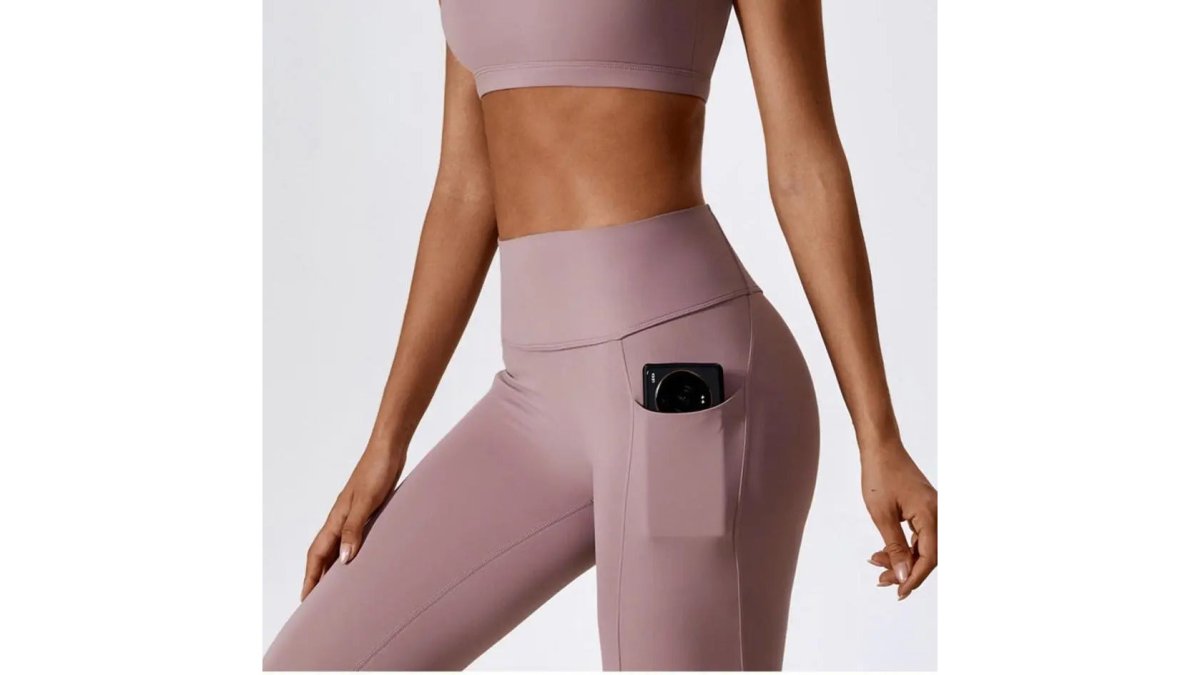
The Marni Pocket Leggings have a contoured fit, a side pocket, and seamless construction.
Watch out: buying a tighter size to get more support backfires. Compression comes from the fabric blend, not from sizing down, and a too-small waistband rolls.
Recycled Fabric Plus Size Leggings: What the Labels Actually Mean
A "recycled" label can mean several things. Recycled content usually refers to polyester made from post-consumer plastic bottles or production offcuts, while natural fibers like organic cotton, hemp, linen, and wool carry their own lower-impact claims. The practical question is not whether a garment contains recycled fiber but how much, verified by whom, and at what cost to stretch and recovery.
Read the percentage before the badge
"Made with recycled fibers" can describe a garment that is 8% recycled polyester and 92% virgin nylon. Flip the tag and look for a number. A common pattern is a recycled-polyester shell blended with spandex; the recycled share is often the base fabric, not the stretch fiber. Spandex is rarely recycled, so a legging advertised as recycled is usually a blend, and blends are harder to recycle at end of life, a trade-off the label will not mention.
Certifications that actually verify content
Third-party programs verify content claims; a brand's own leaf badge does not. The ones you will see on activewear hangtags include:
- Global Recycled Standard (GRS). Verifies recycled content percentage and tracks it through the supply chain, with social and environmental criteria at each processing stage.
- Recycled Claim Standard (RCS). Verifies recycled content only, without the broader environmental and social criteria GRS adds.
- OEKO-TEX Standard 100. Tests for harmful substances in the finished garment; it is a chemical-safety certification, not a recycled-content one, and the two are often displayed together.
The Federal Trade Commission's Green Guides set the rules for how environmental marketing claims must be substantiated in the U.S., including recycled-content claims. A brand that says "eco-friendly" without a named certification is making a mood, not a checkable statement.
The fiber blend drives performance, not the eco claim
Spandex drives stretch and recovery: a 20% spandex legging recovers its shape after a squat; a 5% spandex cotton blend relaxes. Recycled polyester behaves much like virgin polyester in wear, the environmental difference is upstream, so do not expect it to feel softer or last longer. Judge the blend on fit and durability, and the recycled claim separately on the certification.
What the label will not tell you
Recycled content says nothing about longevity, care, or size range. A legging can be 50% recycled and still pill after ten washes, and a brand can carry GRS-certified fabric in a style that stops at XL.
If you want a high-waisted seamless option while you compare labels, you can shop the seamless moisture wicking legging and read its full fabric breakdown on the product page.
Ethical Plus Size Activewear: Verifying Brand Claims
Verifying an ethical plus size activewear claim takes about ten minutes and almost no one does it. The check: a named certification, a published factory list, and a size range beyond a token extra-large. Mastering these simple investigative steps provides the necessary framework to verify sustainable claims whenever you encounter vague marketing promises.
Responsible manufacturing claims are the easiest to test. A brand that names its factories and publishes audit results is making a checkable statement; one that says "ethically made" with no detail is making a mood.
Three questions worth asking:
- Does the brand name a third-party certification, or only its own?
- Does the size range extend through the sizes you actually wear, or stop at XL?
- Does the brand publish care guidance that extends garment life, which is the most direct durability lever a shopper controls?
For a wider set of brands to cross-check against, our sustainable plus size fashion shopping guide walks through how to compare ethical claims side by side.
Sustainable Sports Bras for Plus Sizes: Sizing and Support
Sustainable sports bras for plus sizes fail on sizing more often than fabric. Band and cup are separate measurements, and a bra sized only S/M/L fits a small slice of plus-size bodies well. Treat the size chart as a starting hypothesis, then test it against your measurements and the workout you actually do.
Measure the band and the cup separately
Measure snug around your ribcage, then the fullest part of your bust; the difference gives you the cup. A bra that fits the band but not the cup rides up; one that fits the cup but not the band digs in. For plus sizes, the band matters more than the tag letter, a 38 and a 42 band in the same "XL" can differ by several inches of elastic.
Read the size chart like a reviewer
A size chart is only useful if it lists body measurements, not just garment measurements. Look for bust, underbust, and waist ranges in inches, and check consistency across styles, a detailed leggings chart paired with a generic S/M/L bra grid is a red flag. If the chart lists only S/M/L with no band range, size by your underbust measurement, not your usual top size.
Match support to workout intensity
Support needs change with the workout, and the bra should change with them:
- Low-impact (yoga, walking, daily wear). Containment and comfort matter more than compression. Look for a wide underband, adjustable straps, and moisture-wicking fabric; breathability matters more on a larger chest.
- Medium-impact (cycling, strength training). A firmer band and a racerback or cross-back strap configuration reduce bounce without cutting in.
- High-impact (running, HIIT, jumping). You want encapsulation or a firm compression fit, wider straps, and a band that stays put. A bra rated only for low impact will not hold through repeated jumping, regardless of the fabric.
Check the construction, not just the fabric
Seam placement, strap width, and closure type drive comfort on a larger chest. Bonded or seamless edges reduce chafing; hook-and-eye closures allow fine band adjustment pullover styles cannot. Removable cups reposition easily but can shift during high-impact movement. None of this appears in a star rating, so read the product description for construction terms before you buy.
Sustainability claims on bras
Recycled nylon and polyester are common in bra shells, and the same logic applies: look for a named third-party program (GRS or RCS) and a percentage, not a brand badge. Bras are smaller garments with more elastic and hardware, so the recycled share is often lower than on leggings, another reason to read the number rather than the word.
Skip if: a bra lists only S/M/L and gives no band measurement. That is not inclusive sizing, it is a guess.
Cost Per Wear: Which Pieces Earn Their Price
Cost per wear is the price divided by the number of times you actually wear a piece, the fairest way to judge value in sustainable plus size activewear reviews.
Run the math on our pieces:
- No Cling Premium Biker Shorts, $24.00. Worn twice a week for a year, that is about 23 cents per wear. Layer them under dresses and shorts and the number drops further.
- Marni Pocket Leggings, $47.60. Worn three times a week for a year, roughly 30 cents per wear.
- Indy Leggings, $59.00. Worn three times a week, about 38 cents per wear.
Durability is the other half. Wash cold, skip the dryer where the care label allows, and air-dry to protect elasticity. Our sustainable fashion tips for a long-lasting wardrobe go deeper on making pieces last.
Building Your Capsule With Love Salve
A capsule works when every piece earns a slot, and that is how we build our activewear range at Love Salve. Fewer pieces, worn more often, in colors that mix.
Start with two leggings, one high-impact and one everyday, then add a biker short for layering and a supportive bra. Our high-rise and seamless designs are cut to sit at the natural waist, and sizes run from Small through XL across the range. If you are planning a minimal rotation, our guide to what a minimalist travel capsule wardrobe should include maps out the piece count.
Best for: shoppers who want a small, versatile activewear rotation in neutral and seasonal colors. Skip if: you need extended sizing beyond XL in every style, which our current range does not cover.
Frequently Asked Questions
What materials should I look for in sustainable plus size activewear?
The Sculpted Stretch Leggings are listed as 74% nylon and 27% spandex. Check product listings for the materials specified for each item.
How should plus size sustainable workout clothes fit during high-impact exercise?
The Marni Pocket Leggings have a high-rise waistband that sits at the natural waist and seamless construction. Check the product listing for the features specified for each pair.
Are sustainable workout clothes worth the higher price?
Work out the cost per wear rather than the sticker price. A $59 pair of leggings worn three times a week for a year costs about $0.38 per wear.
How can I tell whether a plus size activewear brand is genuinely sustainable?
The product listings specify materials and, for some items, care instructions. Check each listing for the details provided.
What should I check when reading sustainable plus size activewear reviews?
Prioritize reviews from shoppers in your size range who describe fit on a body similar to yours, not just star ratings. Look for comments on waistband roll-down, seam chafing, and how the fabric held up after several washes. Reviews that mention the size chart being true to size are more useful than generic praise. Ignore reviews that only discuss color or delivery speed, since they tell you nothing about durability or support.
The hard part of buying ethical activewear is not finding options, it is trusting them. We built Love Salve around inclusive sizing, free shipping, and pieces designed for everyday comfort, so you can test a fit without a big commitment. Browse the leggings and biker shorts, check the size chart against your measurements, and start with one piece. Get started with Love Salve and build a rotation you actually wear.


